

The Skin That Listens: Essential Oils and Environmental Volatiles
Key Takeaways
Surface Signaling: Essential oils heal by binding to receptors on the skin's surface; deep bloodstream penetration is not required.
The Receptor Network: The skin uses olfactory, cannabinoid, and TRP receptors to instantly translate oil chemistry into reduced pain, inflammation, and cellular repair.
NICE Network Link: These surface receptors connect directly to the nervous, immune, and endocrine systems, allowing topical oils to lower stress and regulate mood.
Evolutionary Balance: Skin receptors evolved to read natural plant molecules as safety signals. Modern synthetics confuse this system, while authentic oils restore biological calm.
Your skin is talking with the environment. Your body reacts to this communication.
We can use this same network in aromatherapy practice.
Essential oils communicate through receptors located throughout the skin. These receptors respond to volatile molecules and trigger a cascade of biological messages. The activity begins on the surface. No deep penetration is needed for change to occur.

Where Receptors Are Found
The skin contains a range of receptor systems that interpret chemical signals from the environment and essential oils. Each type of receptor plays a specific role in maintaining communication between the skin, the nervous system, hormones, and the immune response.
Epidermis (basal and suprabasal layers):
Olfactory receptors are present in keratinocytes, melanocytes, sebocytes, and hair follicles.
OR2AT4 – found in keratinocytes; stimulates cell proliferation and wound repair.
OR51E2 – expressed in melanocytes; regulates pigment production and supports balanced cellular signaling.
Dermis (fibroblasts, endothelial cells, and sensory endings):
Cannabinoid and TRP (Transient Receptor Potential) receptors play key roles in regulating inflammation, immunity, and pain response.
CB1 and CB2 receptors – located throughout the dermis; CB2 responds to sesquiterpenes and phenolic compounds common in essential oils.
TRPV1 – activated by warming molecules such as black pepper, ginger, and eugenol.
TRPM8 – triggered by menthol, producing a cooling sensation.
TRPA1 – responds to compounds like cinnamaldehyde; influences itch, irritation, and comfort response.
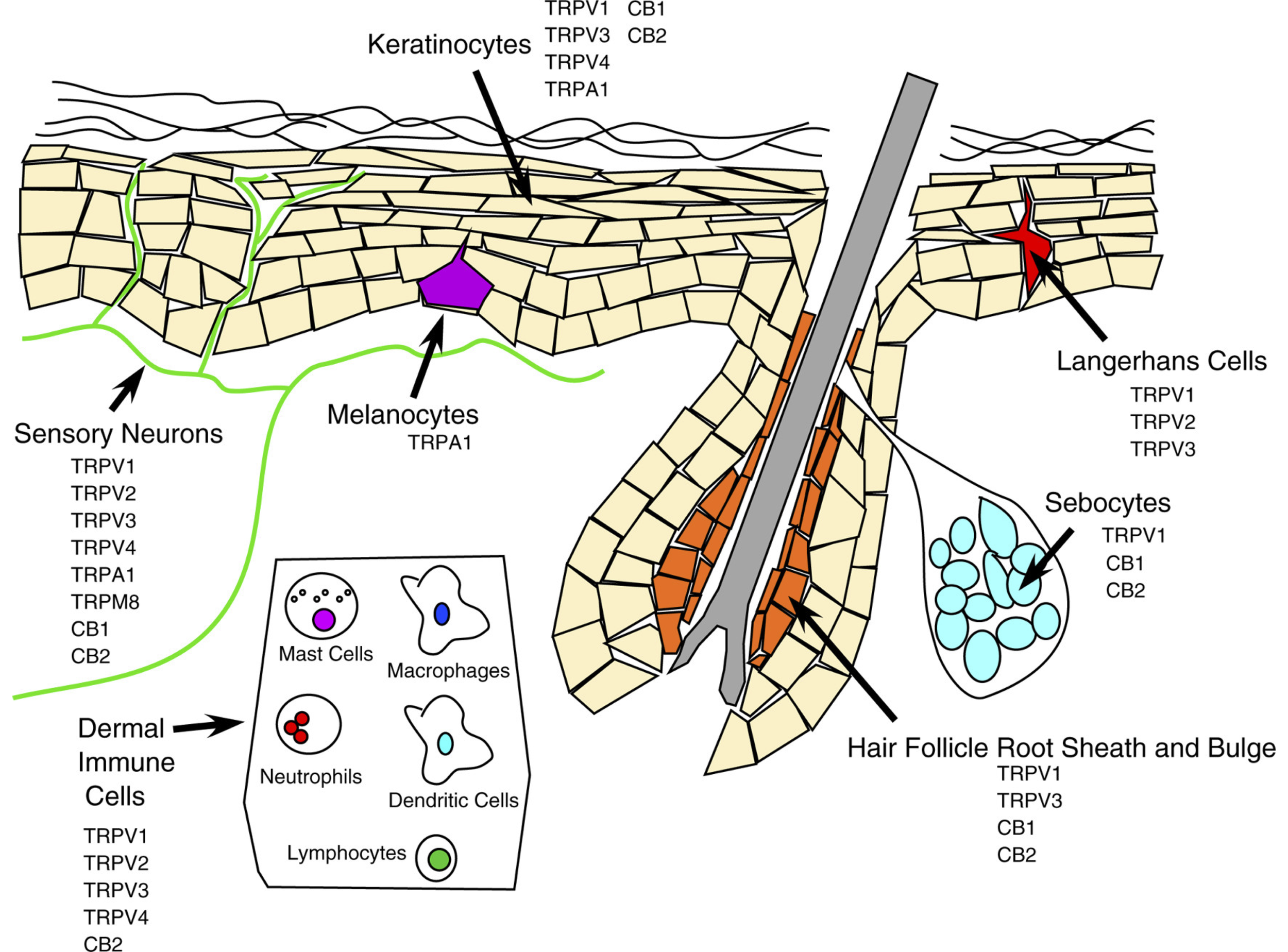
Skin Immune and Neuroendocrine Network (NICE):
This system links the nervous, immune, and endocrine functions of the skin.
Receptors for serotonin, acetylcholine, and neuropeptides exist in both the epidermis and dermis.
These receptors respond to chemical signals from essential oils, influencing stress, mood, inflammation, and barrier repair.
Why Deep Penetration Isn’t Required
Essential oil molecules interact directly with these surface and near-surface receptors. The effects occur through receptor signaling, not through absorption into the bloodstream. When a molecule binds to a receptor, it initiates intracellular communication that influences inflammation, immunity, pigment production, and wound repair. It also affects temperature perception, sensitivity, and stress regulation through localized hormonal-like responses. What occurs is communication, not diffusion.
Evolutionary Purpose and Function
The presence of these receptors is not accidental. They evolved as a system of environmental awareness. Long before modern environments and synthetic air, human skin existed in constant contact with natural volatile compounds—the scent of soil, trees, plants, and water. These molecules signaled safety, nourishment, or danger. The skin needed to detect and respond to them quickly. Through this interaction, receptors evolved as a first line of adaptation, connecting chemical messages in the air to biological responses in the body.
These receptors still carry that intelligence. They are designed to interpret natural volatiles and maintain internal balance through their connection with the nervous and immune systems. This link between environment and biology shaped human evolution and continues to influence well-being.
Modern Life and Environmental Signals
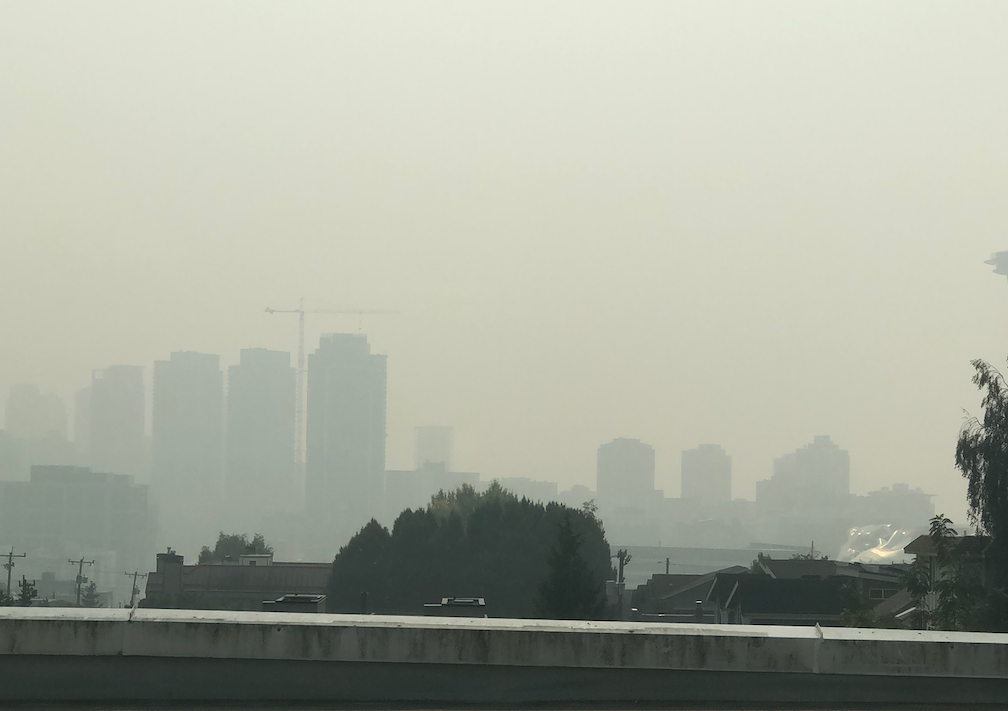
Chronic exposure to synthetic compounds and environmental pollutants can interfere with receptor signaling
Today, natural chemical communication is muted by processed air, artificial fragrance, and environmental pollution. The receptors continue to function, but the information they receive has changed.
Chronic exposure to synthetic compounds and environmental pollutants can interfere with receptor signaling, contributing to stress, sensitivity, and inflammatory imbalance (Kim et al., 2022; Roudsari et al., 2021; Denda & Nakatani, 2019).
Synthetic compounds and constant chemical exposure can distort receptor activity, leading to imbalanced signals that influence stress, sensitivity, and inflammation.
Reintroducing authentic natural molecules—through essential oils, plants, and natural environments—helps restore this biological dialogue. The receptors recognize these signals. They respond with repair, calm, and balance. This interaction reawakens an ancient sensory communication that connects modern physiology with its evolutionary origins.
Environmental Volatiles and Biological Response
Forest bathing offers a clear example of this communication in action. Studies show that time spent in forest environments lowers cortisol, improves immune function, and supports emotional regulation. These effects are linked to exposure to airborne terpenes such as α-pinene, β-caryophyllene, and limonene—the same molecular families found in essential oils. Research confirms that these compounds are inhaled and absorbed through the skin, producing measurable physiological changes (Song et al., 2016).
I propose that this biological response to environmental volatiles includes direct receptor communication at the skin’s surface. Through olfactory, cannabinoid, and TRP pathways, the skin recognizes these airborne molecules and interprets them as environmental information. The body responds with calm, immune regulation, and balance—similar to what occurs with essential oil application.
Awareness in Practice
Forest air, plant volatiles, and essential oils share the same biochemical language. Whether through time in nature or topical use, this molecular dialogue continues to engage an ancient sensory intelligence. The skin that listens.
The idea that the environment speaks to our biology changes how we think about scent and application. It shifts essential oils from product to process. From something we use, to something we communicate with. Every formula, every breath, every touch becomes part of that conversation between the skin and the atmosphere.
When we design scent or apply essential oils in spa and wellness settings, we’re shaping that chemistry of connection. The space, the air, the skin, the nervous system, all responding together. This is where environmental scent design meets receptor science, and where application becomes experience.
Connect with me to learn more about environmental scent design and topical application in spa and wellness. Click here https://app.acuityscheduling.com/schedule/8070a7cd/appointment/51758577/calendar/8031700
References
Olfactory and Cannabinoid Receptors in Skin
Busse, D., Kudella, P., Grüning, N. M., Gisselmann, G., Ständer, S., Luger, T., Jacobsen, F., et al. (2014). A synthetic sandalwood odorant induces wound-healing processes in human keratinocytes via the olfactory receptor OR2AT4.Journal of Investigative Dermatology, 134(11), 2823–2832.
Gelis, L., Schuster, C., Pendzik, P., et al. (2016). Functional characterization of the odorant receptor 51E2 in human epidermal melanocytes.Journal of Biological Chemistry, 291(18), 10006–10020.
Tóth, B. I., Oláh, A., Szöllősi, A. G., & Bíró, T. (2014). TRP channels in the skin: Thermo-mechanosensation, homeostasis and inflammation.Pharmacology & Therapeutics, 138(2), 244–260.
Filipiuc, S. I., et al. (2023). The skin and natural cannabinoids – topical and transdermal: CB1 & CB2 skin receptors in epidermal keratinocytes, cutaneous nerve fibers, dermal cells.International Journal of Molecular Sciences, 24(13), 10755.
Evolutionary and Environmental Function of Receptors
Maßberg, D., & Hatt, H. (2018). Human olfactory receptors: Novel cellular functions outside the nose.Physiological Reviews, 98(3), 1739–1763.
Seo, H., Kim, J., Kim, E., & Park, M. (2022). Association between olfactory receptors and skin function. International Journal of Molecular Sciences, 23(6), 3270.
Environmental Volatiles and Forest Bathing
Song, C., Ikei, H., & Miyazaki, Y. (2016). Physiological effects of nature therapy: A review of the research in Japan. International Journal of Environmental Research and Public Health, 13(8), 781.
Modern Chemical Exposure and Receptor Interference
Kim, M., Park, K., & Kim, Y. (2022).Air pollutants and skin aging: Impact on the skin barrier and the role of the aryl hydrocarbon receptor (AhR).International Journal of Molecular Sciences, 23(8), 4220.
Roudsari, M. R., Lashgari, N. A., Momtaz, S., & Abdollahi, M. (2021). The impact of environmental pollutants on skin physiology and pathophysiology: From molecular mechanisms to clinical evidence.Environmental Science and Pollution Research, 28(34), 46859–46873.
Denda, M., & Nakatani, M. (2019). Olfactory receptors in epidermal keratinocytes and their potential physiological functions.Chemical Senses, 44(2), 85–94.