It was one of those situations where you know, but don't recognize the extent of what you know.
For years I've been using essential oils that are produced primarily in Morocco. This includes cistus (Cistus ladanifer), blue tansy (Tanacetum annuum), and Atlas cedarwood (Cedrus atlantica).
There's something about going to the location where all this is happening.
There's something about going to the location where all this is happening. What I'm referring to as “this,” and the thing I wasn’t recognizing, is the variety and amount of essential oil distillation going on in Morocco.
Maybe It's the French
I discovered more on a second aromatherapy tour I led through the country. My first trip was arranged by a group who knew nothing about essential oils. Mostly what they arranged were tourist stops disguised as oil producers. Not a good first impression. This last trip, with the same host and group from Russia, introduced me to more of what Morocco has to offer.
I should have assumed this essential oil possibility. It was a country occupied by the French from 1912 to 1956. As a result, they have great food and make some very good wines. Though my Moroccan friend emphasized that the wine predates the French. Given the perfumery industry, it makes sense that the French would take on essential oil production in Morocco. Morocco's own traditions of aromatic plants and floral waters go back much further.
The Essential Oils
Morocco has a long history of growing and using aromatic and medicinal plants. Its geography ranges from the cedar forests of the Atlas Mountains to the Atlantic coast, fertile valleys, and arid regions, providing growing conditions for an extraordinary variety of plants.
Morocco's best-known essential oils are already ones I use often.
Atlas cedarwood (Cedrus atlantica) has a sweet, rich woody aroma. Our group ventured into the impressive cedar forests of the Middle Atlas. Visiting the plants and trees always gives an appreciation for the origin and environment of the oil.
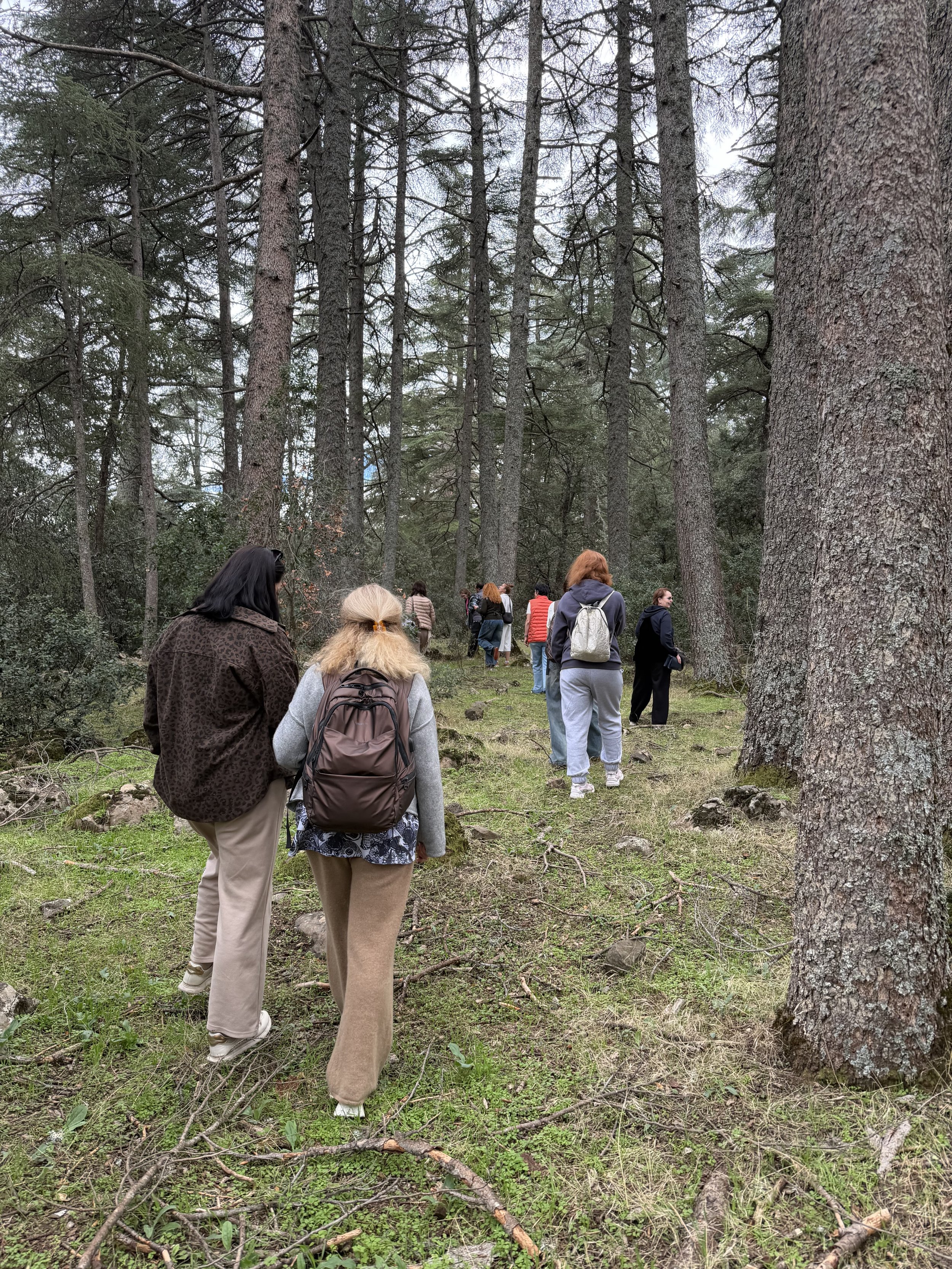
Cistus (Cistus ladanifer) is another favorite. Its complex, resinous aroma and applications in skin care and fragrance blending make it an especially interesting oil. The plant also provides labdanum, a resinous absolute used extensively in perfumery.
Blue tansy (Tanacetum annuum) is one of the more distinctive oils produced in Morocco. Its deep-blue color comes from chamazulene formed during distillation. I use it in skin care formulations designed to reduce inflammation and irritation and soothe conditions of atopic dermatitis.
But these are only a few of the aromatic plants Morocco produces. There's rosemary, myrtle, oregano, eucalyptus, several thyme species, and mint. Then there are the floral oils, including rose and neroli.
I was particularly interested in Moroccan spearmint. At one coop we visited, they produced an oil labeled menthe verte/green mint. It's spearmint, generally Mentha spicata. I've had Moroccan spearmint, and its scent is much more complex than ones I've had from the US. Studies have found considerable variation in Moroccan spearmint chemistry, including oils with different profiles from the familiar carvone-rich spearmint. I'd like to see an analysis of the oil from this coop. Its fragrance suggested an interesting chemical structure.
Moroccan thyme is equally interesting. Thymus satureioides, a species native to Morocco, can have substantial variations in borneol, carvacrol, and thymol content. I've used this thyme in several successful medicinal formulas.
Citrus Essential Oils
Morocco is also a major citrus-growing country, producing oranges, mandarins, lemons, and bitter oranges. I'm interested in learning more about their essential oil production and quality.
Bitter orange (Citrus aurantium) provides three distinct aromatic materials: neroli from the blossoms, petitgrain from the leaves and twigs, and bitter orange essential oil from the fruit peel. The blossoms also produce orange blossom hydrosol, widely used in Moroccan cooking and hospitality.
A Visit to Nectarome
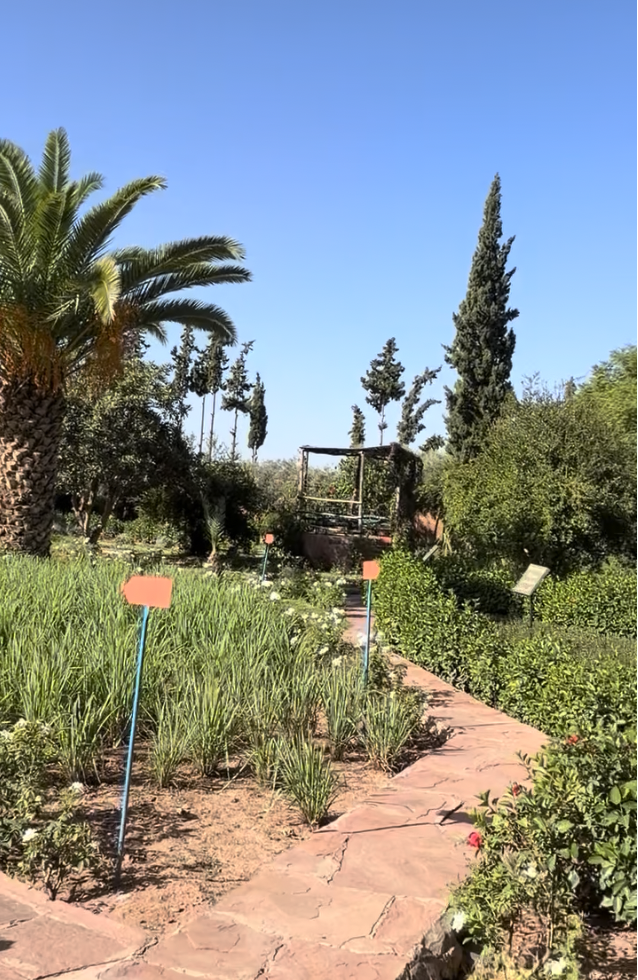
One of our stops was at Nectarome, founded in 1997 by Dr. Jalil Belkamel, his brother Dr. Abdelfattah Belkamel, and cosmetic formulator Youssef Dehbi.
After studying essential oils and natural substances in France, Jalil returned to Morocco and recognized the potential of the country's aromatic and medicinal plants. They established Nectarome in the Ourika Valley, combining traditional Moroccan botanical knowledge with modern cosmetic formulation.
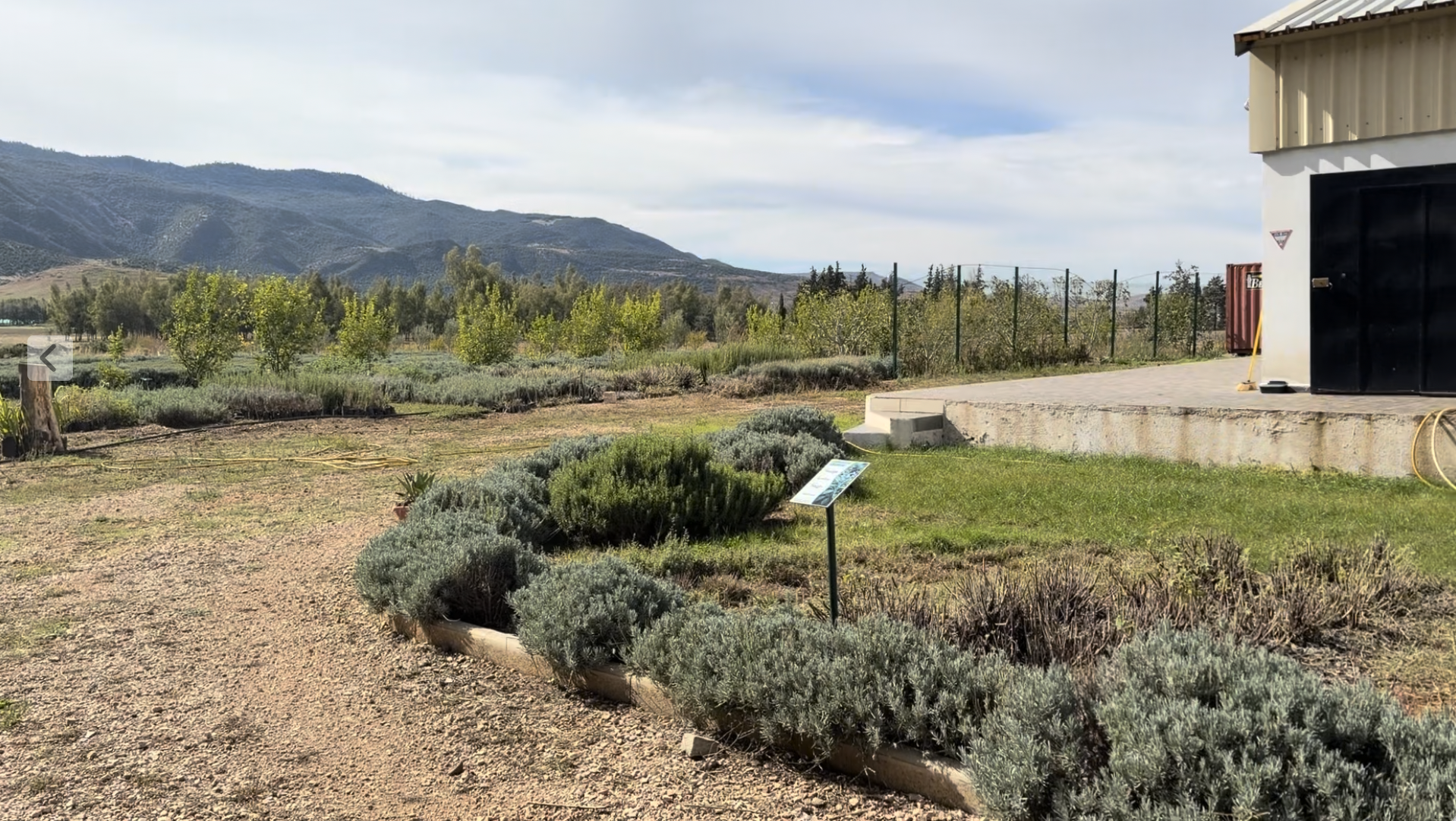
I had the pleasure of meeting Dr. Jalil Belkamel. We toured their beautiful gardens filled with medicinal and fragrant plants, including lime, grapefruit, green myrtle, rosemary, lavenders, and peppermint.
We also toured their production facility and distillation area, though in October nothing was being distilled. After the tour, they served an incredible lunch. Truly one of the best Moroccan tagines I had the whole trip.
It was pretty cool to see Nectarome using Miron violet glass packaging. I started using this light-protective glass with the botanical skin care company I co-founded more than twenty years ago.
An Aromatic Plant Cooperative in Azrou
We stopped at an agricultural cooperative in Azrou, near the Atlas cedar forests. Interestingly enough, they were attempting to grow saffron in their garden.
Saffron is grown primarily around Taliouine, in the Anti-Atlas Mountains, where the environment is ideal. I was told saffron typically doesn't grow well outside that region, which made the cooperative's experiment interesting.
I'm interested in finding more of these smaller producers that may not have the international exposure of larger essential oil companies.
Argan, Prickly Pear, and the Women's Cooperatives
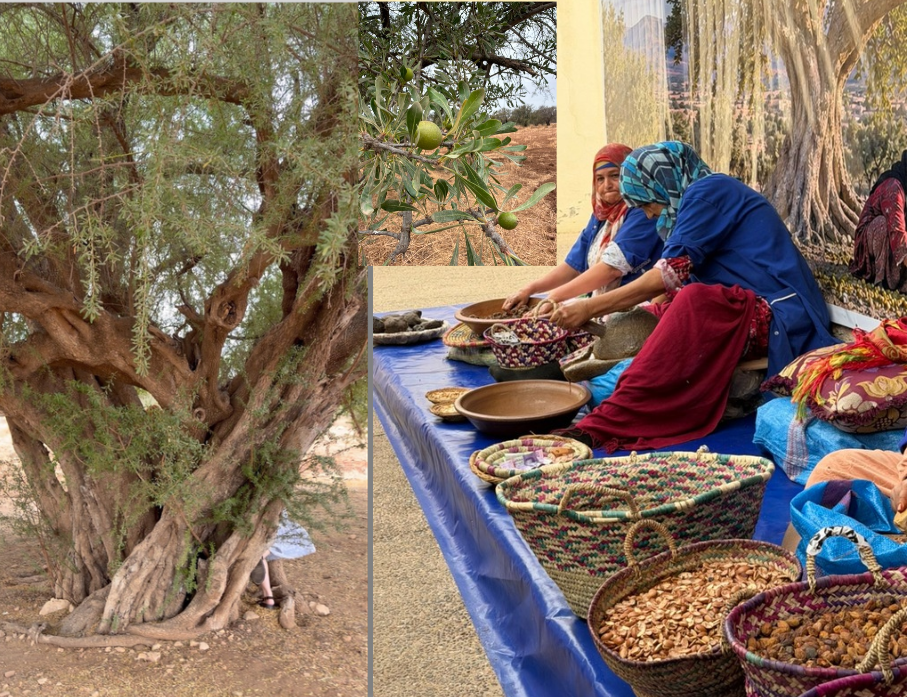
Morocco is known for argan oil, particularly around Essaouira. Argan is a fixed botanical oil rather than an essential oil, rich in oleic and linoleic fatty acids, with a long history of skin and hair care use.
Another pressed oil is prickly pear seed oil (Opuntia ficus-indica). I haven't used it yet. After exploring and sampling this oil, it will find its way into my skin care formulations.
We visited a women's argan cooperative near Essaouira. The presentation was a little touristy, but the traditional processing methods were interesting. I particularly like that these cooperatives provide employment and economic opportunities for women in rural Moroccan communities. And the 500-year-old argan tree was pretty cool too.
Rose, Neroli, and Floral Waters
On my previous visit, two years ago, I traveled through the Valley of Roses. What surprised me was how much synthetic rose fragrance I encountered, even in the rose-growing region. There's an enormous difference between genuine rose essential oil, rose absolute, rose hydrosol, and a product scented with synthetic rose fragrance.
Morocco also produces neroli essential oil and orange blossom water from bitter orange blossoms.
Rose and orange blossom waters are used in Moroccan cooking, personal care, and hospitality. One tradition I first experienced years ago at a Moroccan restaurant in the United States was having scented floral water poured over our hands at the end of a meal.
These aromatic waters are part of Morocco's food, hospitality, and everyday traditions.
Finding New Moroccan Essential Oil Sources
I'm now on a mission to develop relationships with Moroccan growers, distillers, and botanical oil producers, particularly smaller operations producing high-quality essential oils, argan, and prickly pear seed oils.
For essential oils, I want to know the botanical species, growing region, extraction methods, and chemical composition. GC-MS analysis is an important part of evaluating oils, especially when there can be significant variation within a species.
But I also want to know the people producing them.
There's a unique connection to an oil when visiting the places where these materials originate and meeting the people involved in their production.
I came away from Morocco with a much greater appreciation for the range of aromatic plants and botanical oils being produced there, and I'm looking forward to exploring more of them.
This was part of the Moroccan Aromatherapy Tour and Workshops I led with a group of my students from Russia.
Contact me jimm@jimmharrison.com
if you're interested in having me lead a retreat or come to your resort as a visiting expert.